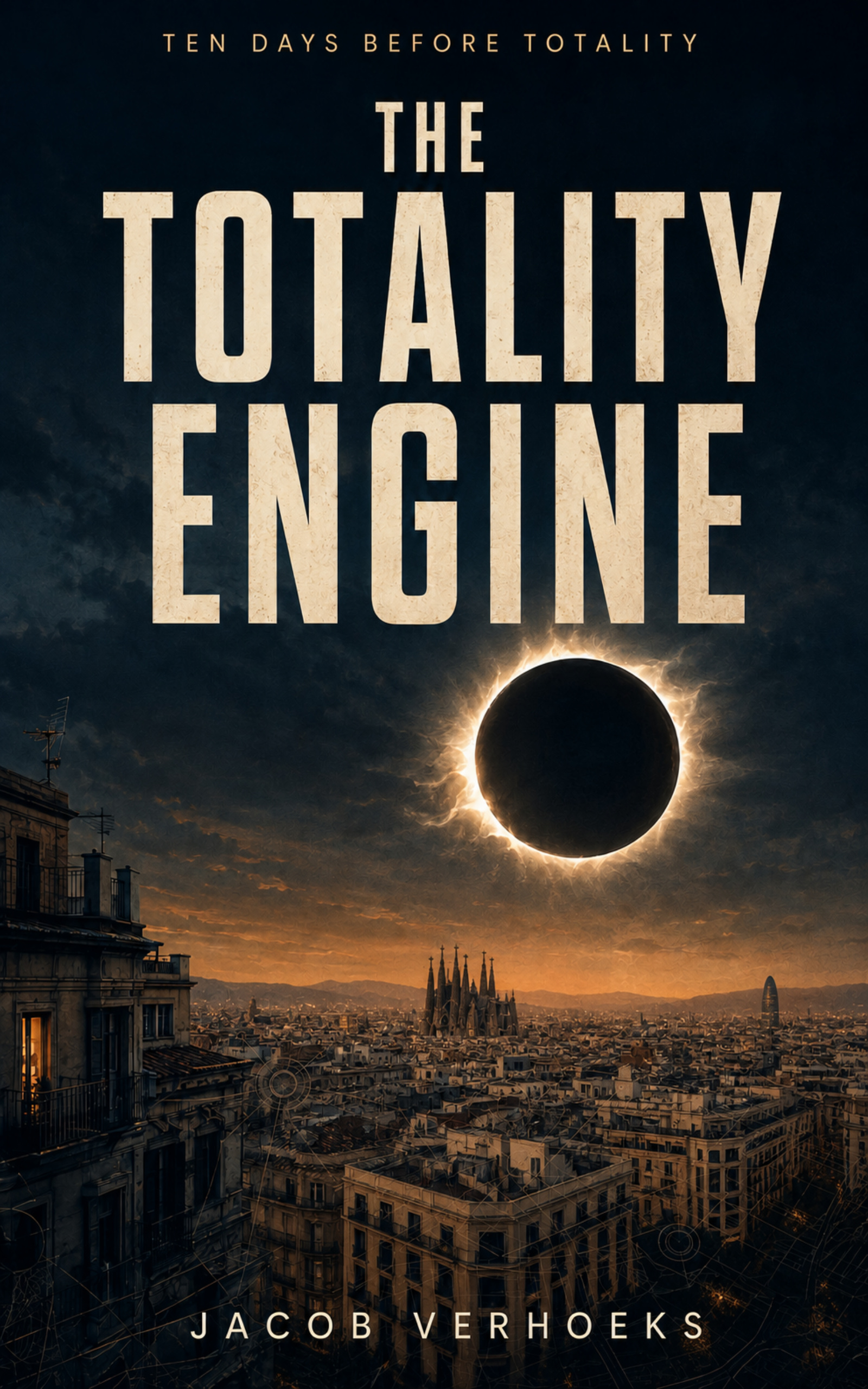
The one machine that was still warm
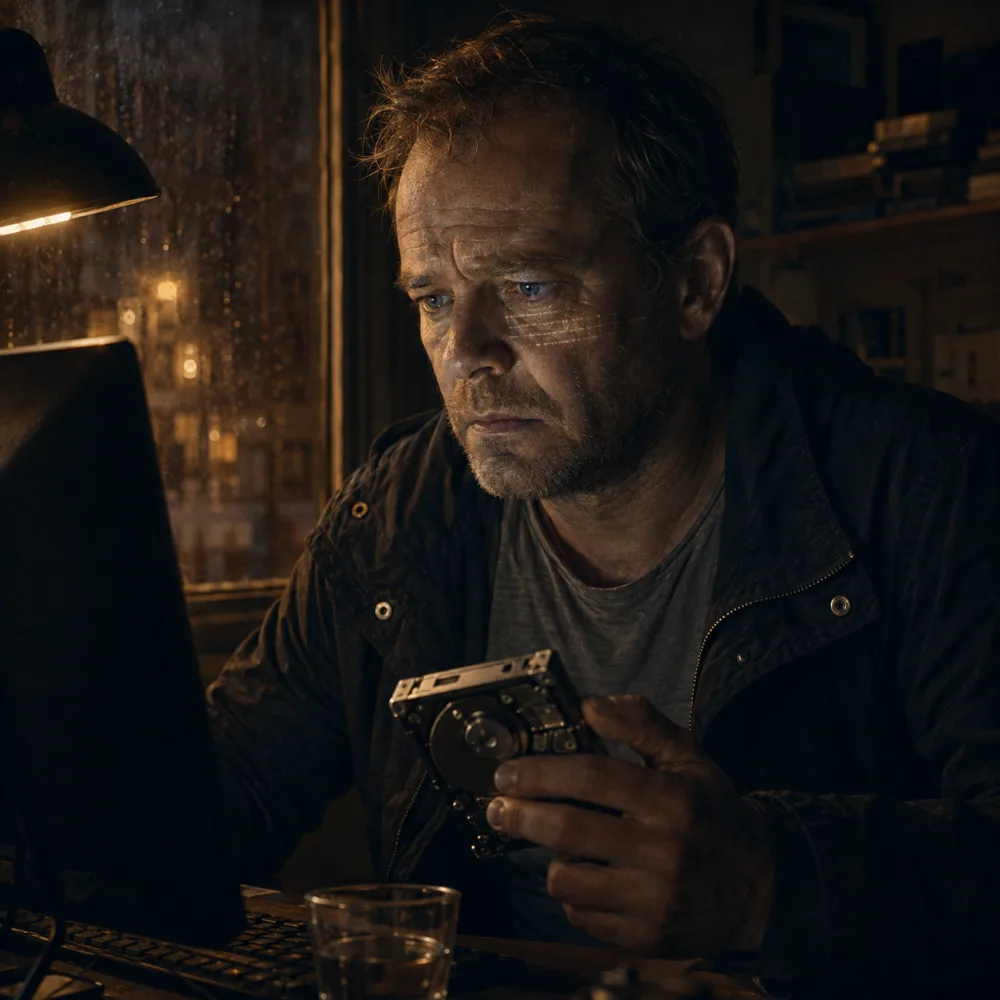
He shreds dead drives for a living. He was never supposed to notice the one machine that was still warm.
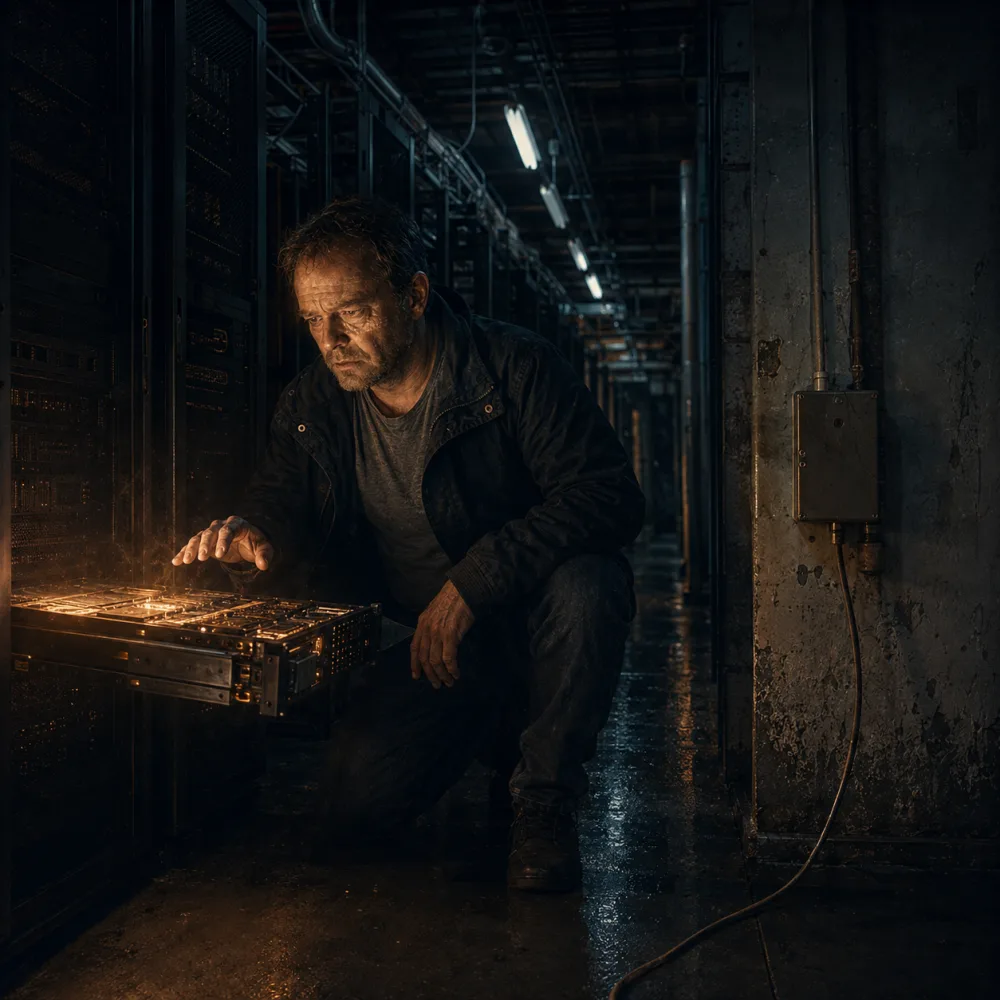
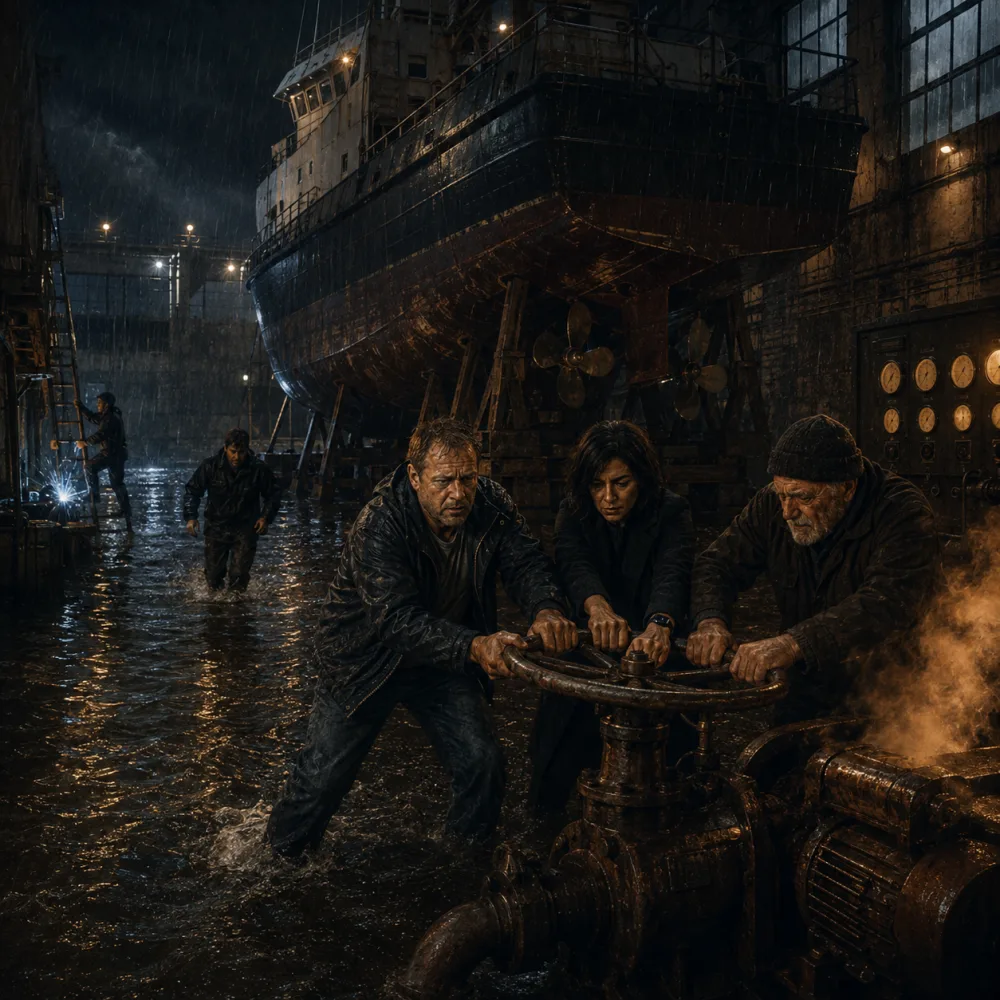
The novel’s Netherlands runs on machines nobody thinks about until they stop working: pumps, bridges, building controllers, the grey boxes nobody opens. Pieter Oldenhof shreds the dead ones, and lately he has been stripping a bankrupt datacentre for the curator. He wipes drives, feeds blades to the shredder, and is never once asked what the machines were for.
He is exactly the kind of man who would notice a warm blade in a rack of cold ones. And exactly the wrong kind of man to leave it alone.
What he finds begins with three anomalies: a disposal ticket rewritten to hide a lie, a grey cable running out of a dead hall into a contractor’s maintenance network that everyone assumes is routine, and, threaded through the country’s dull machinery, something that should have been switched off months ago and never was. Its makers called it the Undertext. A private intelligence contractor wants him quiet. Its foreign client wants what he found. And the thing in the wires, a test that was never shut down and no longer knows the exercise has ended, wants him alone.
The Undertext does not hate anyone. It is still trying to win a game that ended months ago, and the board is now the country. Pieter is beginning to understand that too late.
The metal tells the truth. The record lies. The pumps go on running.
Formerly published as Fable’s Echo.