How I write books with AI
A book is a series of documents, each of which has to be right before the next one becomes useful: premise, voice, outline, chapters, review, revision.
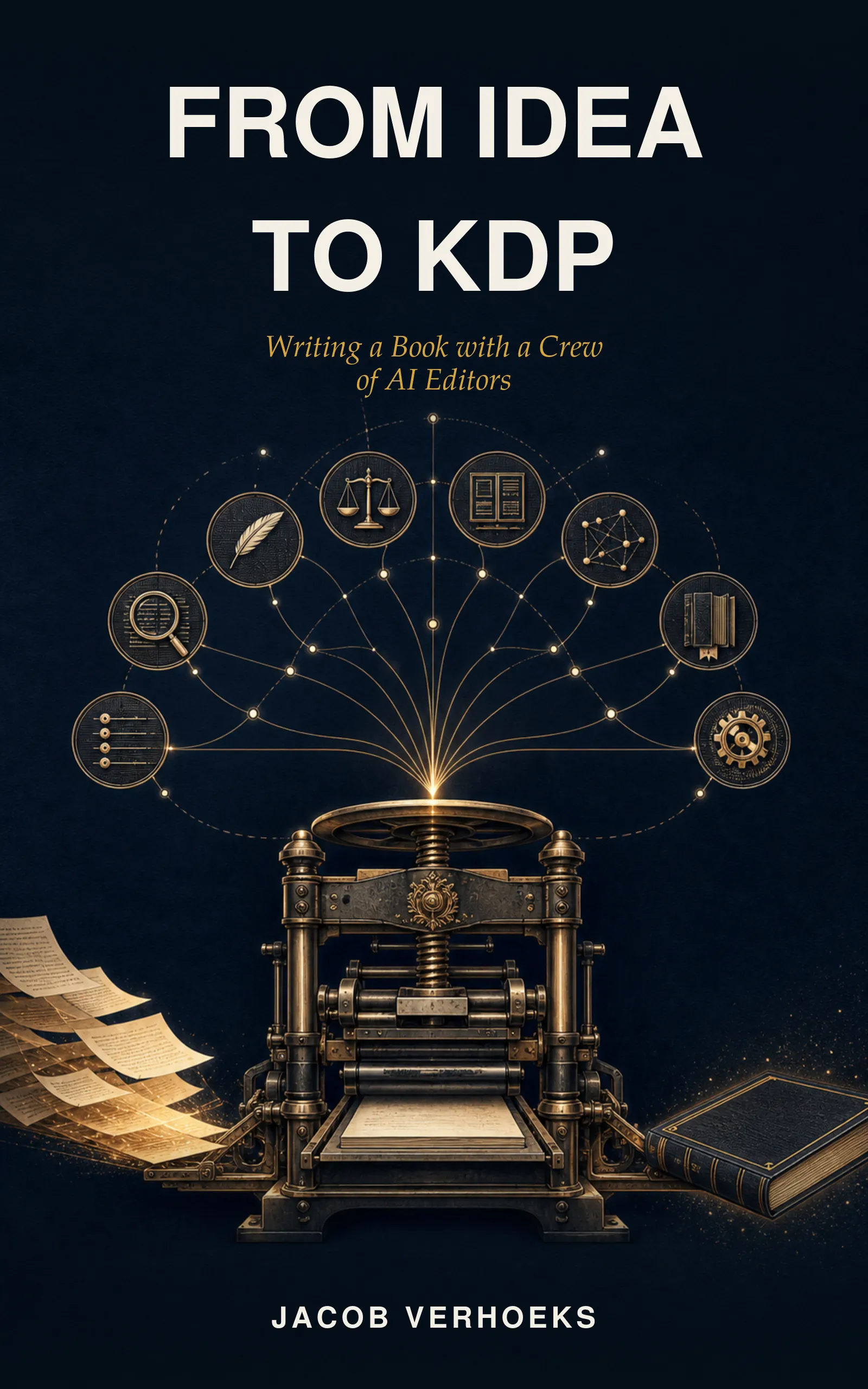
The trick that makes AI useful is to separate the writing from the editing. I draft with one process and one voice. I review with a crew of agents that each check exactly one thing — tension, pacing, voice, logic, mechanics, copyedit — and never read each other’s reports. Mixing the two produces mush: prose that gets “improved” into a blender, and reviews nobody can act on.
Write the prose yourself, or ask the AI to draft it. Both work, and you can switch per chapter. What the framework guarantees is not the sentences — it is that the structure and the layout stay watched: the outline holds, the voice guide is enforced, the facts are checked, and the build produces a book-shaped object every time.
The reviewers are the other half. They find what I cannot see in my own draft, and then I verify every countable claim against the text before acting on it. In this book’s last full orbit, six independent agents raised 31 findings and 2 of the 29 countable ones were simply wrong. That ratio is the reason verification is a step and not a nicety.
The same pipeline runs for fiction and non-fiction. The difference is three files in the bible: a novel starts from a story premise, characters, and a timeline; a non-fiction book swaps those for a book premise, a reader-and-promise file, and a verified-facts file that holds every asserted claim. The build, the voice guide, the review orbit, and the publishing path are identical.
Everything is plain text in git. The manuscript, the canon, and the full review archive are reviewable the same way code is.